A traumatic brain injury sustained in a Dallas or Fort Worth car accident can fundamentally alter the course of a person’s life. While broken bones heal and bruises fade, the brain—the body’s most complex organ—often carries invisible wounds that persist for years or even permanently. In the sprawling Dallas-Fort Worth metroplex, where millions of vehicles navigate congested highways daily, motor vehicle collisions remain a leading cause of traumatic brain injuries. Understanding the long-term consequences of these injuries is essential for victims and their families as they navigate recovery, medical treatment, and potential legal claims under Texas law.
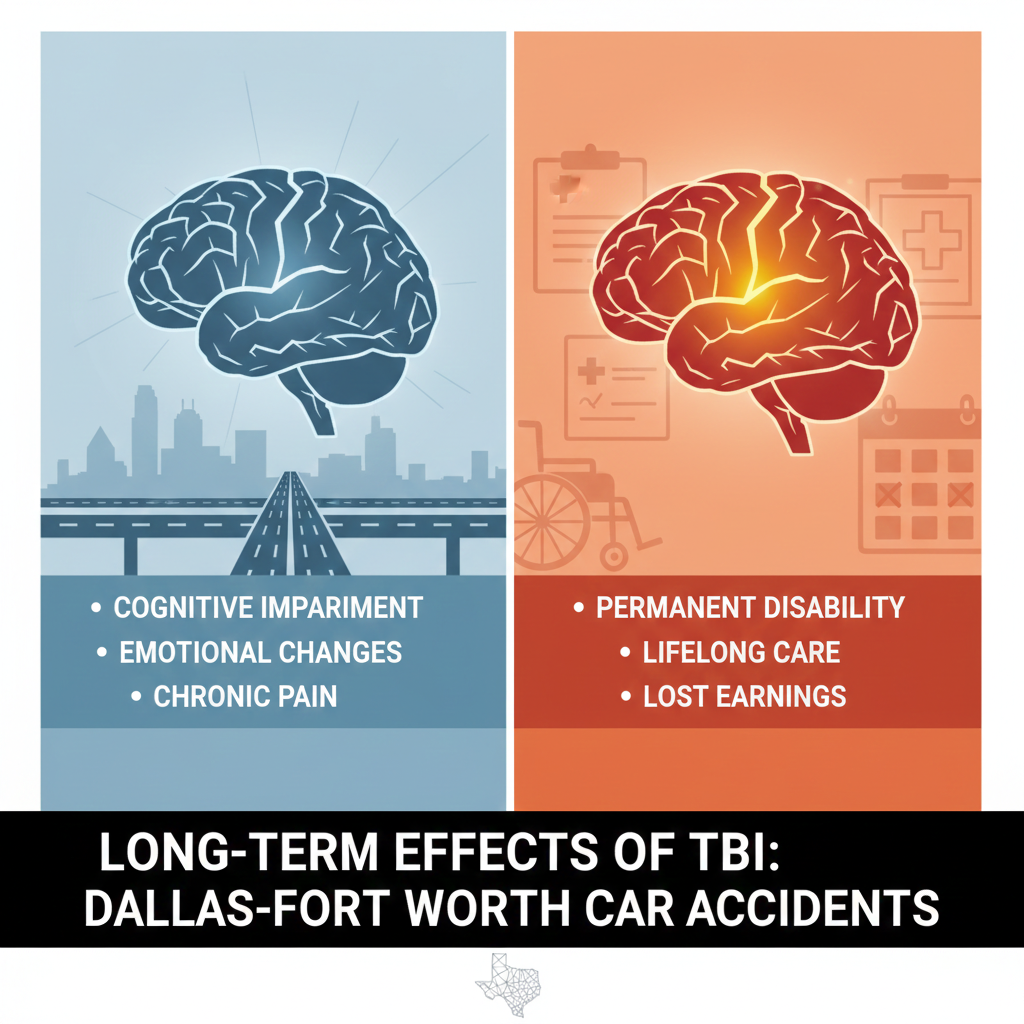
Traumatic brain injuries exist on a spectrum, and the long-term effects experienced by survivors depend significantly on the severity of the initial trauma. Medical professionals typically classify TBIs into three categories: mild, moderate, and severe.
Mild TBIs, commonly known as concussions, may involve brief loss of consciousness (if any) and temporary confusion. While often dismissed as minor, research from the National Institutes of Health indicates that even mild TBIs can produce lasting cognitive difficulties, particularly when victims sustain multiple injuries over time.
Moderate TBIs involve extended periods of unconsciousness (typically 30 minutes to 24 hours) and may result in more pronounced long-term impairments affecting memory, concentration, and emotional regulation.
Severe TBIs represent the most catastrophic injuries, often involving extended coma, skull fractures, or penetrating wounds. Survivors of severe traumatic brain injuries frequently face permanent disabilities requiring lifelong care and support.
In high-speed collisions common on Dallas-Fort Worth highways like I-35, I-635, and I-20, the forces involved can produce any severity level of brain trauma, making prompt medical evaluation critical regardless of how a victim initially feels after the crash.
Among the most challenging long-term effects of traumatic brain injury are cognitive impairments that may not fully resolve despite treatment and rehabilitation. These difficulties often become apparent only as survivors attempt to return to work, school, or daily responsibilities.
Memory Problems: Both short-term and long-term memory can suffer following a TBI. Survivors may struggle to recall recent conversations, forget appointments, or have difficulty learning new information. These memory deficits often persist for years after the initial injury.
Attention and Concentration Difficulties: Many TBI survivors report an inability to focus on tasks, becoming easily distracted or overwhelmed in environments with multiple stimuli. This impairment can make returning to demanding professional work extremely challenging.
Executive Function Deficits: The brain’s executive functions—planning, organizing, problem-solving, and decision-making—frequently suffer damage in traumatic injuries. Survivors may struggle with tasks that previously came naturally, from managing finances to navigating complex social situations.
Processing Speed Reduction: Information processing often slows considerably after brain trauma. Tasks that once took minutes may now require substantially more time, affecting both professional productivity and personal independence.
These cognitive changes can be particularly devastating for professionals in the Dallas-Fort Worth area whose careers depend on mental acuity, potentially resulting in lost wages and diminished earning capacity that compound over a lifetime.
The emotional aftermath of a traumatic brain injury often proves as debilitating as physical symptoms. Research demonstrates that traumatic brain injury may cause anxiety and other psychological conditions that emerge months or even years after the initial trauma.
Depression: Studies indicate that TBI survivors face significantly elevated rates of depression compared to the general population. This depression stems from both neurological changes in brain chemistry and the psychological burden of coping with new limitations.
Anxiety Disorders: Generalized anxiety, panic attacks, and post-traumatic stress disorder commonly affect brain injury survivors. The unpredictability of symptoms and fear of cognitive decline can trigger persistent anxiety that interferes with daily functioning.
Personality Changes: Perhaps most difficult for families to accept are the personality changes that can follow brain trauma. Previously calm individuals may become irritable or aggressive, while outgoing personalities may withdraw socially. These changes can strain marriages, friendships, and family relationships.
Emotional Dysregulation: The brain regions controlling emotional responses are vulnerable to trauma damage. Survivors may experience inappropriate emotional reactions, mood swings, or difficulty controlling anger—changes that affect relationships and employment prospects alike.
While cognitive and emotional effects often dominate discussions of long-term TBI consequences, physical symptoms frequently persist for years after the accident, affecting quality of life and requiring ongoing medical management.
Chronic Headaches: Post-traumatic headaches represent one of the most common long-term physical complaints among TBI survivors. These headaches may be severe, frequent, and resistant to typical pain management approaches.
Sleep Disorders: Traumatic brain injuries frequently disrupt normal sleep patterns, leading to insomnia, excessive daytime sleepiness, or altered sleep-wake cycles. Poor sleep, in turn, exacerbates cognitive and emotional symptoms.
Sensory Impairments: Vision problems, hearing loss, tinnitus, and altered senses of smell or taste can persist indefinitely following brain trauma. These sensory changes affect safety, enjoyment of life, and overall functioning.
Motor Function Difficulties: Depending on injury location and severity, survivors may experience lasting coordination problems, balance issues, tremors, or partial paralysis requiring physical therapy and adaptive equipment.
Seizure Disorders: Post-traumatic epilepsy develops in a significant percentage of moderate-to-severe TBI survivors, sometimes appearing months or years after the initial injury and requiring lifelong medication management.
One of the most insidious aspects of traumatic brain injury is that delayed symptoms of traumatic brain injuries may not manifest until days, weeks, or even months after the initial accident. This delayed onset can lead victims to underestimate their injuries initially, potentially affecting both medical treatment and legal claims.
In the immediate aftermath of a Dallas-Fort Worth car accident, adrenaline and shock may mask serious symptoms. Victims may refuse ambulance transport or delay seeking medical attention, believing their injuries are minor. However, internal bleeding, swelling, or subtle brain damage may progress over time, with symptoms gradually emerging or suddenly worsening.
This delayed presentation underscores the importance of comprehensive medical evaluation following any car accident involving head trauma, regardless of initial symptom severity. Prompt documentation also creates essential medical records should a personal injury claim become necessary.
When young people sustain traumatic brain injuries in car accidents, the long-term consequences can be particularly profound. Research has established that a brain injury in childhood may mean difficulty in adulthood, affecting educational achievement, career prospects, and social development.
Children’s brains are still developing, and trauma can disrupt normal developmental processes in ways that only become apparent as the child matures. A child injured at age eight may seem to recover quickly, only to struggle academically in high school when coursework demands more sophisticated cognitive skills.
For young victims in the Dallas-Fort Worth area, appropriate educational accommodations, early intervention services, and long-term monitoring become essential components of care. Families must advocate for resources and plan for potential lifelong support needs.
The financial burden of a traumatic brain injury extends far beyond initial hospital bills. Long-term costs may include:
Economic analyses estimate that lifetime costs for severe traumatic brain injury can exceed several million dollars, placing tremendous strain on families and potentially requiring legal action to secure adequate compensation from at-fault parties.
Victims of car accidents in Dallas-Fort Worth who sustain traumatic brain injuries may have legal recourse against negligent drivers. Texas personal injury law provides mechanisms for recovering compensation for medical expenses, lost income, pain and suffering, and other damages.
Several key legal considerations apply to TBI claims in Texas:
Statute of Limitations: Under Texas Civil Practice and Remedies Code § 16.003, personal injury claims must generally be filed within two years of the accident date. However, the delayed onset of brain injury symptoms can complicate this timeline, making early legal consultation advisable.
Comparative Fault: Texas follows a modified comparative negligence rule. Victims may recover damages as long as they bear less than 51% responsibility for the accident, though recovery is reduced proportionally to their degree of fault.
Wrongful Death Claims: When a traumatic brain injury proves fatal, surviving family members may pursue wrongful death claims under Texas Civil Practice and Remedies Code Chapter 71.
Documentation Requirements: Building a strong TBI claim requires comprehensive medical documentation, accident reports filed pursuant to Texas Transportation Code Chapter 550, expert testimony regarding future care needs, and evidence establishing the at-fault party’s negligence.
Given the complexity of traumatic brain injury cases and the challenges of proving invisible injuries, working with legal professionals experienced in brain injury litigation becomes particularly important.
The duration of TBI symptoms varies significantly based on injury severity. Mild TBIs may resolve within weeks to months, while moderate-to-severe injuries often produce permanent symptoms requiring lifelong management. Even mild TBIs can cause symptoms lasting a year or more in some cases.
Yes. Moderate and severe traumatic brain injuries frequently result in permanent disabilities affecting cognition, motor function, emotional regulation, and overall quality of life. Even mild TBIs can produce lasting effects, particularly when victims sustain multiple concussions.
Texas law generally requires personal injury lawsuits to be filed within two years of the injury date under Tex. Civ. Prac. & Rem. Code § 16.003. However, certain exceptions may apply, making consultation with a legal professional advisable to understand applicable deadlines.
Diagnosis typically involves neurological examination, cognitive testing, and imaging studies such as CT scans or MRIs. Some brain injuries may not appear on initial imaging, requiring follow-up testing as symptoms develop. Neuropsychological evaluations can document subtle cognitive deficits.
Texas personal injury law permits recovery of economic damages (medical expenses, lost wages, reduced earning capacity) and non-economic damages (pain and suffering, mental anguish, loss of enjoyment of life). The specific compensation available depends on case circumstances, injury severity, and establishing the at-fault party’s liability.
Yes. Texas law permits certain family members—including spouses, children, and parents—to pursue wrongful death claims under Chapter 71 of the Texas Civil Practice and Remedies Code when a traumatic brain injury proves fatal.
The long-term effects of traumatic brain injuries from Dallas-Fort Worth car accidents extend into every aspect of a survivor’s life—affecting career trajectories, relationships, financial stability, and overall well-being. While medical advances continue to improve treatment options and outcomes, many TBI survivors face a lifetime of managing symptoms and adapting to new realities.
Understanding the full scope of potential long-term effects empowers victims and families to seek appropriate medical care, plan for future needs, and protect legal rights. Comprehensive documentation of injuries, symptoms, and their evolution over time becomes essential both for treatment planning and potential legal claims.
For those navigating the aftermath of a traumatic brain injury in the Dallas-Fort Worth area, resources including medical specialists, rehabilitation programs, support groups, and legal professionals experienced in brain injury cases can provide critical assistance on the road to recovery and justice.
Disclaimer: This blog is for informational purposes only and does not constitute legal advice. Past results do not guarantee future outcomes. For personalized counsel, contact Ted B. Lyon & Associates.
Co-sponsored with myLawCLE, Jeff Grell of Ted Lyon Law and Kevin P. Roddy of Wilentz,… Read More
Recognizing TBI Symptoms After Accidents in Texas Being involved in a car accident in Texas… Read More
Traumatic Brain Injury Compensation Claims in Texas Explained A traumatic brain injury (TBI) can profoundly… Read More
Texas Statute of Limitations for Car Accident Lawsuits After a car accident in Texas, victims… Read More
Understanding Comparative Negligence Laws in Texas Car Accidents Car accidents in Texas can be complex,… Read More
Long-Term Effects of Traumatic Brain Injuries and Legal Options in Texas A traumatic brain injury… Read More

