
Delayed Symptoms of Traumatic Brain Injury After a Car Accident in Dallas-Fort Worth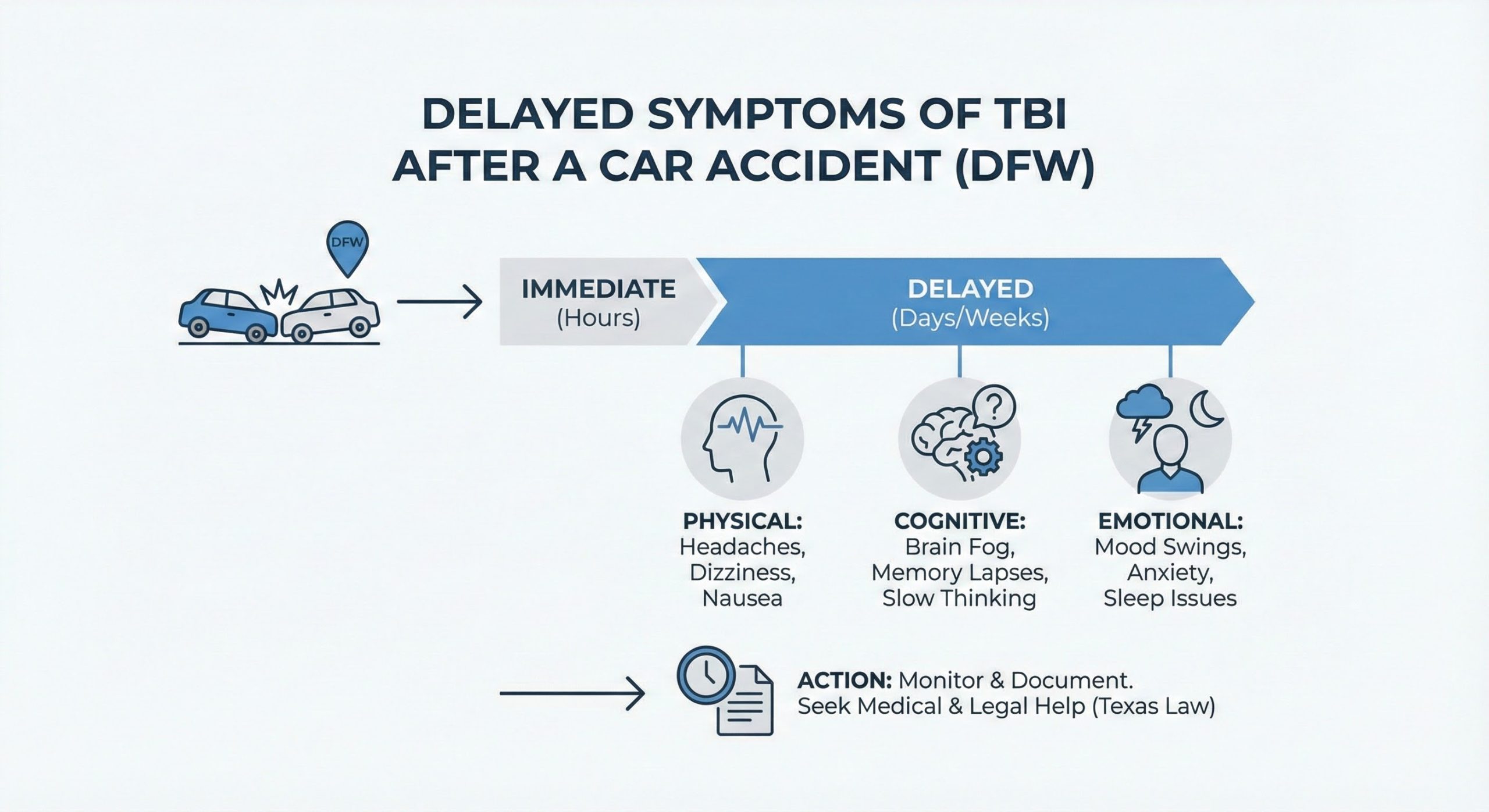
After a seemingly minor fender-bender, especially in high-traffic areas like the Dallas Fort Worth metroplex, many people feel mostly fine at first, only to experience headaches, brain fog, or other cognitive issues days later. This pattern is more common than many realize. Traumatic brain injuries, including concussions, can present delayed symptoms that may indicate underlying damage and can interfere with daily life, work performance, relationships, and overall well-being.
Using guidance from established medical resources and relevant Texas law, this article explains why traumatic brain injury symptoms can appear later, which warning signs to watch for, and the potential legal considerations under Texas statutes so readers can make informed decisions and respond appropriately if symptoms develop after a crash.
What Is Traumatic Brain Injury and How Does It Occur in Car Accidents?
Traumatic brain injury happens when a sudden force disrupts normal brain function, often from the head striking an object or the brain jolting inside the skull. In car accidents, this can stem from direct impacts like hitting the dashboard or indirect forces like whiplash in rear-end collisions. According to the Centers for Disease Control and Prevention, motor vehicle crashes account for about 14% of traumatic brain injury cases nationwide, with symptoms ranging from mild to severe.
In Dallas-Fort Worth, where traffic is relentless—over 26,000 crashes in Dallas alone in recent data extending into 2025 trends per the Texas Department of Transportation—the risk is heightened (source). With countless stories from local victims, even “minor” accidents on roads like Loop 12 can cause invisible damage. The brain’s protective fluid and skull aren’t always enough against the physics of a crash, leading to bruising, bleeding, or swelling that might not show immediately.
Texas law recognizes these injuries in personal injury claims, but proving causation requires linking the accident to your condition, as outlined in the Civil Practice and Remedies Code Section 18.001 for affidavits on damages (source). Understanding this foundation helps appreciate why symptoms can lag behind the event.
Why Do Symptoms of Traumatic Brain Injury Appear Delayed?
Delayed symptoms arise because initial adrenaline masks pain, and subtle brain changes like inflammation or micro-bleeds take time to manifest. A study from the National Institute of Neurological Disorders and Stroke notes that secondary injuries, such as swelling, can develop hours or days post-impact (source).
In car accidents, the delay is common due to the brain’s compensatory mechanisms. For instance, after a rear-end collision, whiplash might not reveal cognitive issues until stress subsides. It’s noted how victims dismiss early fatigue as “just stress,” only to face escalating problems. Medical experts emphasize monitoring, as untreated delays can worsen outcomes.
Common Delayed Symptoms of Traumatic Brain Injury After a Car Accident
Delayed symptoms can emerge days to weeks after the crash, often catching victims off guard. Physical signs include persistent headaches that intensify, nausea, dizziness, or sensitivity to light and noise, as detailed by the Centers for Disease Control and Prevention.
Cognitive delays might involve memory lapses, difficulty concentrating, or slowed thinking—issues that disrupt jobs in DFW’s fast-paced economy. Emotional changes, like irritability, anxiety, or depression, can strain personal lives. Sleep disturbances, such as insomnia or excessive fatigue, compound these.
These symptoms feel insidious; a Fort Worth driver might notice mood swings weeks after an I-20 incident, attributing them to unrelated stress. The Brain Injury Association of America highlights that up to 50% of traumatic brain injury cases involve such delays, urging vigilance (source).
Physical Delayed Symptoms to Watch For
Beyond headaches, watch for vertigo, blurred vision, or tinnitus. These can signal vestibular damage from the crash’s force. In Texas, documenting these with medical visits strengthens claims under the Rules of Evidence for admissibility.
Cognitive and Emotional Delayed Symptoms
Confusion, forgetfulness, or decision-making struggles are cognitive red flags. Emotionally, sudden anger or sadness may appear. Linking to our guide on immediate signs, tracking progression is key.
Why Car Accidents in Dallas-Fort Worth Often Lead to Delayed Traumatic Brain Injury Symptoms
DFW’s traffic woes—fatal crashes trending down but still significant in 2025, with 116 fatalities in Fort Worth per Texas Department of Transportation reports—amplify risks (source). Hotspots like I-635 and Skillman Street see high volumes, leading to whiplash-inducing stops.
Low-speed crashes, common in congested areas, can still cause delayed traumatic brain injury through rotational forces. Distracted driving, penalized under Texas Transportation Code Section 545.4251 (source), contributes, as does speeding on I-35.
Urban density means more multi-vehicle incidents, where initial shock delays symptom recognition. Texas Department of State Health Services data shows rising traumatic brain injury hospitalizations in the region (source).
High-Risk Crash Types for Delayed Traumatic Brain Injury
Rear-end collisions often cause whiplash-related delays. Intersection crashes at places like Griffin and Elm involve side impacts, leading to cognitive lags. Head-on collisions on highways like I-20 can delay severe symptoms due to initial trauma focus.
The Role of Medical Diagnosis in Identifying Delayed Symptoms
Diagnosis involves neurological exams, cognitive tests, and imaging like magnetic resonance imaging for subtle changes. The Glasgow Coma Scale assesses initial severity, but follow-ups catch delays.
In DFW, centers like UT Southwestern use advanced tools (source). Texas law requires timely medical evidence for claims, per Civil Practice and Remedies Code Section 18.001 (source).
Challenges with Invisible or Delayed Traumatic Brain Injury
Invisible traumatic brain injury lacks clear scans, requiring neuropsychological evaluations. Proving these in court uses expert testimony, crucial under Texas Rules of Evidence.
Legal Implications of Delayed Symptoms in Texas Car Accident Claims
Texas’s two-year statute of limitations under Civil Practice and Remedies Code Section 16.003 starts from accrual, but the discovery rule may toll for undiscoverable injuries like delayed traumatic brain injury (source). Cases like Childs v. Haussecker affirm this for latent conditions.
Comparative fault in Section 33.001 reduces awards if you’re partially responsible (source). Insurance tactics downplay delays, but documentation counters this.
Victims often face denials; strong records and expert input turn tides. Settlements for delayed traumatic brain injury average $252,000-$850,000 in Texas 2025 data.
Impact on Compensation and Settlements
Delayed symptoms can increase damages for ongoing care, but proving linkage is key. Recent verdicts, like an $831 million Texas award in 2025, show potential.
When to Seek Medical and Legal Help for Suspected Delayed Traumatic Brain Injury
Consult a doctor if symptoms persist beyond a week. In DFW, facilities like Baylor University Medical Center offer expertise. Legally, the two-year clock ticks, but tolling for unsound mind under Section 16.001 may apply (source).
Resources include the Brain Injury Network of Dallas. Linking to our statute guide, timely action preserves rights.
FAQ: Common Questions About Delayed Traumatic Brain Injury Symptoms After Car Accidents
What are delayed signs of brain injury after a car accident?
Delayed signs include worsening headaches, memory problems, dizziness, mood swings, and sleep issues, appearing days to weeks later.
Can a rear-end collision cause traumatic brain injury?
Yes, whiplash from rear-end crashes can lead to traumatic brain injury, even at low speeds, with settlements often $100,000+ in Texas.
How long after a car accident can traumatic brain injury symptoms appear?
Symptoms can emerge up to weeks or months later, due to secondary brain changes like swelling.
What tests prove invisible brain damage after auto accident?
Neuropsychological tests and expert evaluations prove invisible damage when scans are normal.
Is mild traumatic brain injury from car crash worth hiring a lawyer in Texas?
Yes, especially for delayed symptoms affecting compensation under Texas’s comparative fault rules.
Conclusion
Delayed symptoms of traumatic brain injury after a car accident in Dallas-Fort Worth can transform a seemingly minor event into a major ordeal, but knowledge empowers. By recognizing signs like persistent headaches or cognitive fog, understanding why they lag, and grasping Texas legal nuances—like the two-year statute with potential tolling—you can take proactive steps. Early awareness often makes the difference in recovery and justice. Stay vigilant, document thoroughly, and seek professional guidance to navigate this path.
Disclaimer: This blog is for informational purposes only and does not constitute legal advice. Past results do not guarantee future outcomes. For personalized counsel, contact Ted B. Lyon & Associates. The disclaimer must not create an attorney-client relationship, is not legal advice, and is for informational purposes only.