



Texas truck accident lawyer — Not all motor vehicle accidents are alike. If you’ve been involved in a crash with an 18-wheeler or other commercial truck, your case will look very different from a typical car wreck. Federal safety rules, multiple potential defendants, and layered insurance policies create a more complex legal landscape in Texas truck accident claims. Here’s what makes trucking cases unique. For a broader primer, see How Commercial Vehicle Accidents Differ in Texas and What to Do After a Texas Truck Accident.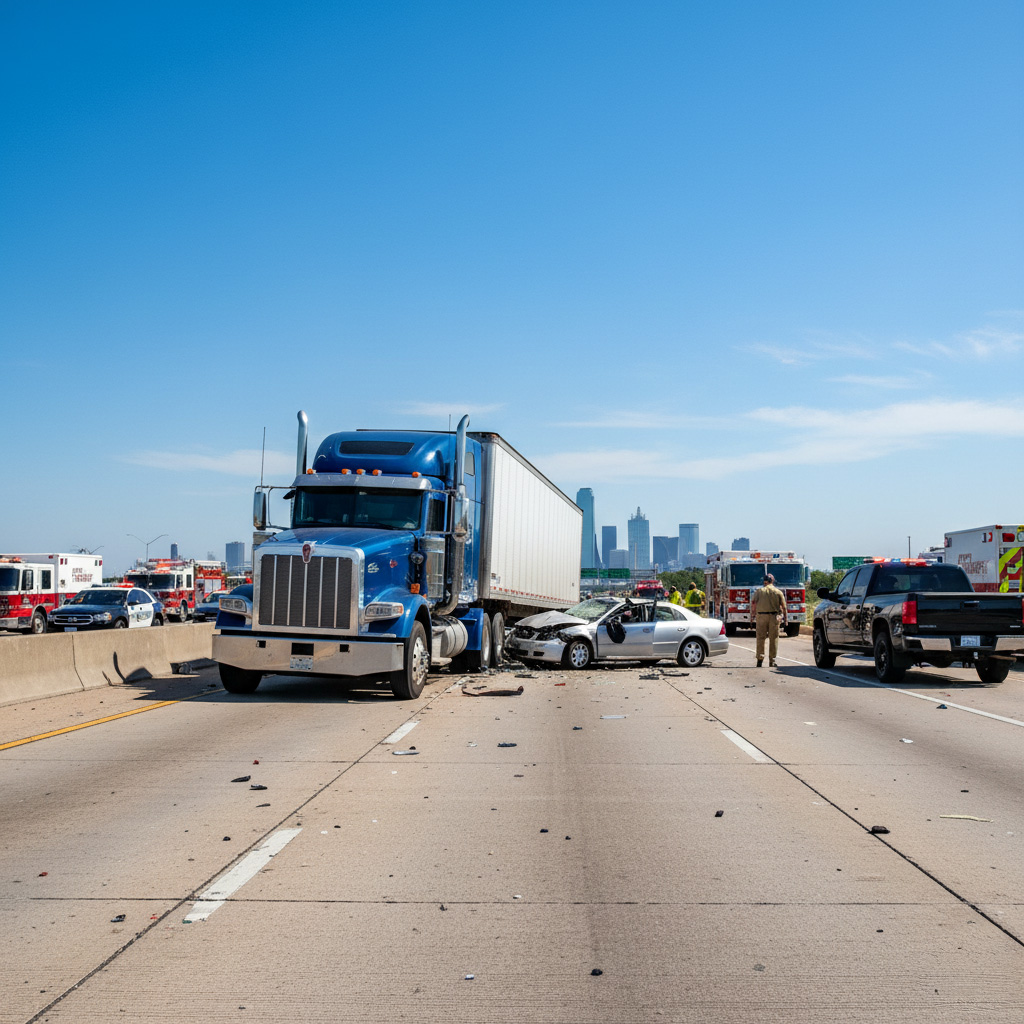
1. Federal & State Rules Apply Together
Car accidents usually involve Texas traffic laws alone. But trucking cases add a second layer: Federal Motor Carrier Safety Regulations (FMCSRs), which cover driver hours, vehicle maintenance, cargo securement, and drug/alcohol testing. These rules are enforced alongside Texas Transportation Code provisions on crashes and reporting. If a trucking company violates FMCSA standards, that evidence can help establish negligence in court.
Learn more about federal rules in our guides: Federal Regulations that Govern the Trucking Industry and How Many Hours a Trucker Can Drive.
2. Multiple Defendants May Be Liable
In a two-car crash, liability typically falls on one or both drivers. In trucking accidents, the web of responsibility is broader. Potential defendants include:
- Truck driver — for negligence such as speeding or fatigue.
- Motor carrier/employer — under Texas respondeat superior or negligent hiring/supervision theories.
- Cargo shipper or loader — if improper securement caused a rollover or spilled load (see our unsecured load article).
- Maintenance contractor — for faulty repairs or inspection failures.
- Broker — in some cases, for negligent selection of carriers.
Texas law on proportionate responsibility (Civil Practice & Remedies Code Ch. 33) allows juries to divide fault among multiple parties. For a practical overview of responsibility in these cases, see Who Is Liable for Commercial Truck Accidents in Texas? and Who Is Responsible for a Truck Accident? You can also review how fault allocation affects recovery here: Texas Comparative Negligence in Personal Injury.
3. Higher Insurance Requirements
Texas drivers must carry minimum liability insurance of $30,000/$60,000/$25,000 (Transp. Code §601.072). Trucking companies, by contrast, are often required by federal law to carry at least $750,000 to $5 million in coverage, depending on the cargo type.
In practice, truck accident claims may involve multiple insurance layers: the driver’s personal policy, the carrier’s liability coverage, and sometimes excess or umbrella policies. That coverage structure is very different from the “one-policy” setup in most car crashes. For practical tips on finding adequate coverage after a serious wreck, see Finding Enough Insurance After a Catastrophic Truck Accident.
4. Evidence Collection Is More Complex
In car wrecks, evidence usually comes from police crash reports, photos, and witness statements. Truck accident cases demand much more, such as:
- Electronic control module (“black box”) data on speed, braking, and hours driven.
- Driver logbooks and electronic logging device (ELD) records.
- Truck inspection and maintenance records.
- Cargo bills of lading and loading dock logs.
This evidence can disappear quickly. Texas law allows courts to penalize “spoliation” if a company destroys or withholds evidence, but fast preservation steps are critical. For a deeper dive, see What’s Involved in a Truck Accident Investigation?, Important Evidence in Truck Accident Cases, and The Value of Black Box Data in Texas Truck Accident Cases.
5. Deadlines & Procedures Remain Strict
Despite these differences, one similarity with car wrecks is the statute of limitations: under Texas Civil Practice & Remedies Code §16.003, most personal injury claims—including truck accidents—must be filed within two years of the crash. Missing this deadline can bar recovery entirely. For timing specifics, see What Is the Time Limit for Filing a Truck Accident Injury Claim? and our general deadline explainers: Texas Injury Lawsuit Deadline and Texas Personal Injury Statute of Limitations.
Quick Comparison: Truck vs. Car Accidents in Texas
| Issue | Car Accident | Truck Accident |
|---|---|---|
| Governing Rules | Texas Transportation Code | Texas Transportation Code + FMCSRs (overview) |
| Potential Defendants | Driver(s) | Driver, Carrier, Shipper, Loader, Broker, Maintenance Co. (who can be liable) |
| Insurance | Minimum $30K/$60K/$25K | $750K–$5M, multiple layers (finding coverage) |
| Evidence | Crash report, photos, witnesses | Black box data, logs, inspection, bills of lading (key evidence) |
| Statute of Limitations | 2 years (CPRC §16.003) | 2 years (CPRC §16.003) (truck-claim deadline) |
Helpful Internal Resources
- The Value of Black Box Data in Texas Truck Accident Cases
- Facts About Truck Accidents Caused by Unsecured Loads
- What to Know About Jackknife Truck Accidents
- What’s Involved in a Truck Accident Investigation?
- Who Is Liable for Commercial Truck Accidents in Texas?
- Federal Regulations that Govern the Trucking Industry
Disclaimer: This blog is for informational purposes only and does not constitute legal advice. Past results do not guarantee future outcomes. Reading this article does not create an attorney-client relationship.