



If you’ve been injured in a car crash, slip-and-fall, or workplace accident in Texas, don’t wait too long to take legal action. The law places strict deadlines on your right to file a personal injury lawsuit—and missing them can cost you your case.
In this post, we explain the statute of limitations for personal injury in Texas, key exceptions, and why timing matters for protecting your rights.
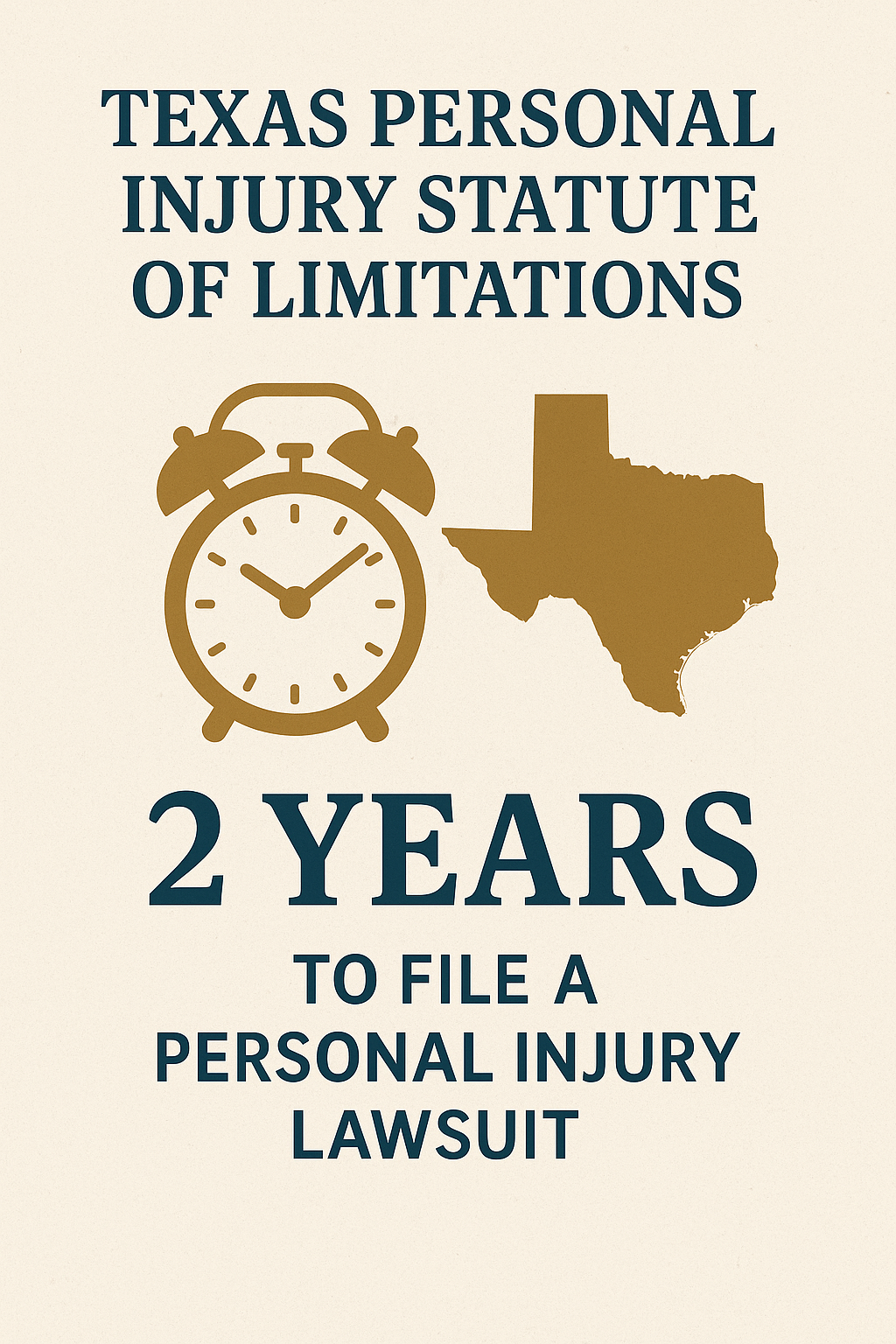 What Is the Statute of Limitations in Texas for Personal Injury?
Under Section 16.003 of the Texas Civil Practice and Remedies Code, the general statute of limitations for most personal injury cases is two years from the date of the injury. This includes claims related to:
- Car accidents
- Truck or motorcycle collisions
- Slip-and-fall or premises liability
- Workplace injuries (excluding workers’ comp claims)
- Wrongful death (from the date of death)
This means you typically have 24 months to file a lawsuit, or your claim may be permanently barred.
When Does the Clock Start?
The statute of limitations begins on the day your injury occurred—or in some cases, the day you discovered the injury. For example, if you suffer a back injury in a wreck but only get diagnosed weeks later, the clock may start on the wreck date unless an exception applies.
Exceptions That Could Extend the Deadline
Texas law does allow certain exceptions to the two-year limit:
1. Minor Children or Legal Disability
If the injured person is under 18 or mentally incapacitated at the time of injury, the clock is paused (called “tolling”) until the disability is removed. See Tex. Civ. Prac. & Rem. Code § 16.001.
2. Government Entity Involvement
If you’re suing a city, county, or other governmental unit, you must file a formal notice of claim within 6 months of the injury—often even shorter depending on the local rules. See Chapter 101 of the Civil Practice and Remedies Code for notice requirements under the Texas Tort Claims Act.
3. Fraud or Delayed Discovery
In rare cases, the discovery rule may delay the start of the clock until you knew or reasonably should have known you were injured by someone’s negligence (common in toxic exposure or defective product cases).
Why It’s Risky to Wait
Even if you’re still recovering or dealing with insurance, waiting too long can hurt your case:
- Evidence disappears: Security footage is deleted, witnesses move or forget.
- Insurance leverage decreases: If the deadline passes, insurers know you can’t sue and may lowball your claim.
- You could lose your legal right: Courts will dismiss cases filed after the deadline.
Examples of Deadlines in Action
- Dallas car accident: Injured on March 1, 2023 → Deadline to file is March 1, 2025
- Fort Worth slip-and-fall: Injury occurred December 15, 2022 → Deadline was December 15, 2024
- Wrongful death claim: Victim passed on July 10, 2023 → Family must file by July 10, 2025
What If I Already Missed the Deadline?
If you’re close to or past the two-year limit, speak with a lawyer immediately. Some narrow exceptions may still apply, but you must act fast. Don’t assume the statute of limitations has fully run until it’s been reviewed by an experienced Texas personal injury attorney.
FAQ: Texas Injury Statute of Limitations
How long do I have to file a car accident claim in Texas?
You generally have 2 years from the date of the accident to file a personal injury lawsuit under Texas Civil Practice & Remedies Code § 16.003.
What happens if I miss the statute of limitations deadline?
If you miss the deadline, your case may be dismissed, and you could lose the right to compensation forever.
Are there exceptions for minors or incapacitated individuals?
Yes. The statute of limitations may be paused (tolled) until the individual turns 18 or regains legal capacity under § 16.001 of the Texas Civil Practice and Remedies Code.
Key Takeaway
Time is not on your side after an injury in Texas. Know the deadline, document your injuries, and act quickly to protect your legal rights.
Disclaimer: This blog is for informational purposes only and does not constitute legal advice. Past results do not guarantee future outcomes. For personalized counsel, contact Ted B. Lyon & Associates.